There is a running joke in my family about books with talking animals.
At some point in my youth, my older brother asked me what I was reading. I launched into an explanation about Redwall, a lovely series by English author Brian Jacques who started the books for a group of children he read to at the Royal Wavertree School for the Blind.
The books generally center around the inhabitants of Redwall Abbey whose peaceful ways are often disrupted by the schemes of various villains, from plundering rat hordes to wildcat warlords. With each quest there are warrior badgers, witty hares, cunning weasels, and courageous mice. (Incidentally, these are also some of the first children’s or young adult books to breach the generally accepted 200-page standard length at the time, getting up to 400+ pages!)
After I explained the book my brother burst out laughing (although I think I really lost him somewhere around “Cluny the Scourge”) and to this day he will still occasionally ask me if I’m reading “any good books with talking animals.”
For a long time this always made me feel a little silly to be reading something so juvenile (or so I had been convinced).
Now however, I find his reaction interesting.
When you think about it, stories with talking and/or anthropomorphized animals appear regularly in the foundational narratives for most cultures. They play a significant role in many myths and folktales, sometimes a more significant role than the humans.
They are main characters in many respected and beloved children’s stories, including Winnie the Pooh, Charlotte’s Web, the Wind in the Willows, and The Chronicles of Narnia, and they are found in other classics like The Little Prince, Watership Down, The Jungle Book, and Alice’s Adventures in Wonderland.
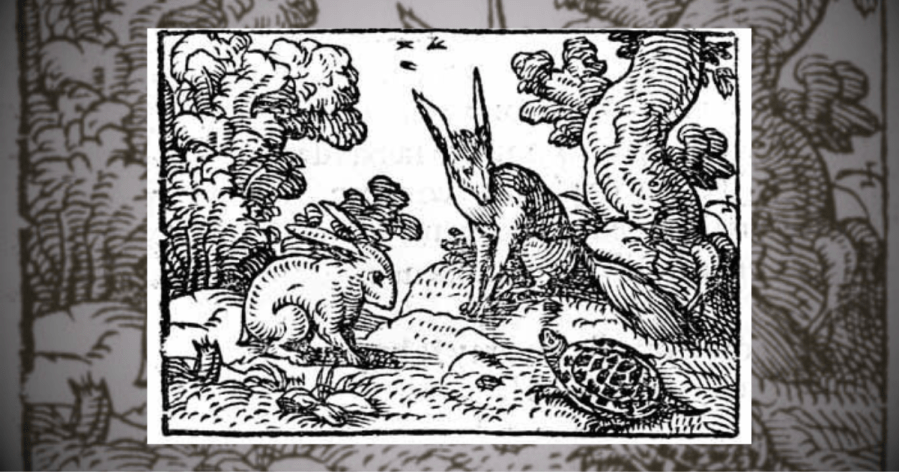
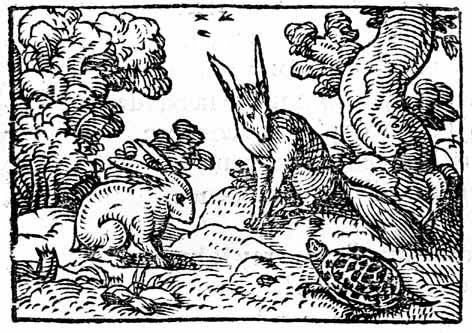
There are several theories about why we include animals as narrators or characters in stories. They can be effective instruments for lessons in morality, like in Aesop’s Fables, or George Orwell’s Animal Farm. They can also help us see the world from a different perspective, like some of my favorite childhood books written by Minnesota naturalist Emil E. Liers who wanted to educate others about some misunderstood animals.
So why do some stories with animals or even talking animals seem childish, while others are profound?
I think it comes down to our own hollow constructions of hierarchy – humans are superior to animals, adult voices are superior to a child’s. If a book is written for a child, or a teen, it cannot be as substantial as a book written for an adult.
I think these hierarchies are – at best – painfully ignorant prejudices that keep readers from enjoying or appreciating great stories. At worst, they can be elitist sentiments that devalue the voices and experiences of those who have been artificially placed beneath others.
A bit dramatic perhaps, but not untrue. So, with that in mind, I have a proposal.
Reading Challenge: Find a book told from an animal’s point of view (it doesn’t need to be fantasy) that you think looks too childish for you. To be fair, find one that has some decent ratings. Try to keep an open mind and see what it has to offer. Then come back and share your thoughts.
Thanks for stopping in!
 Booklight Reviews